Choosing Upholstery Fabric for Hotels and Restaurants
How to choose contract upholstery fabric: Martindale and Wyzenbeek rub counts, pilling, colourfastness, fire standards, cleanability and performance fabrics.
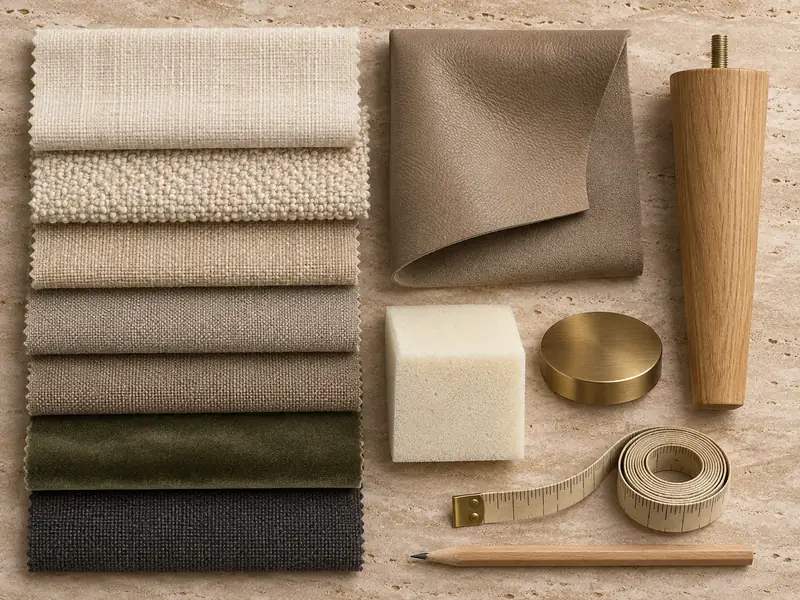
In a hotel lobby or restaurant, upholstery fabric works harder than in any home. It is sat on hundreds of times a week, cleaned frequently and exposed to strong light. Choosing a fabric only by colour and hand-feel is a common and expensive mistake. Here is what to check.
Abrasion resistance: Martindale and Wyzenbeek
Two tests measure how many rubs a fabric withstands before visible wear.
- Martindale (used in Europe, the UK and much of Asia) rubs the fabric in a figure-of-eight pattern. Results are given in rubs.
- Wyzenbeek (used mainly in North America) rubs back and forth and reports double rubs.
| Application | Martindale | Wyzenbeek |
|---|---|---|
| Decorative / occasional | 10,000–15,000 | 9,000 |
| General residential | 15,000–25,000 | 15,000 |
| Contract (general) | 30,000+ | 15,000–30,000 |
| Heavy contract (lobbies, dining) | 50,000+ | 30,000+ |
Other performance tests that matter
- Pilling – graded 1 to 5; specify grade 4 or better for contract.
- Colourfastness to light – important near windows; ask for a blue-wool scale result of 5 or higher.
- Colourfastness to rubbing – dry and wet rubbing affects light-coloured clothing.
- Seam slippage – loosely woven fabrics can pull apart at seams under load.
Fire safety standards
Requirements differ by country and by building type. Common standards include BS 5852 (UK, with Crib 5 for many contract uses), BS EN 1021-1/-2 (cigarette and match tests used across Europe), and California TB 117-2013 for residential upholstery in the United States. Your project specification or local authority will state which apply. A capable factory can source compliant fabrics and fillings and provide test reports.
Cleanability and performance finishes
Restaurants need fabrics that release food and drink stains. Options include solution-dyed acrylics and polyesters, which hold their colour even when cleaned with diluted bleach, and fabrics with water- and stain-repellent finishes. For bedrooms and lounges, removable and washable covers on loose cushions are a practical alternative.
Fabric types at a glance
- Linen and linen blends – relaxed and natural, but wrinkle and can be less abrasion-resistant. Blends with polyester improve performance.
- Velvet – rich colour and a soft hand; performance velvets with high rub counts are widely used in bars and lounges.
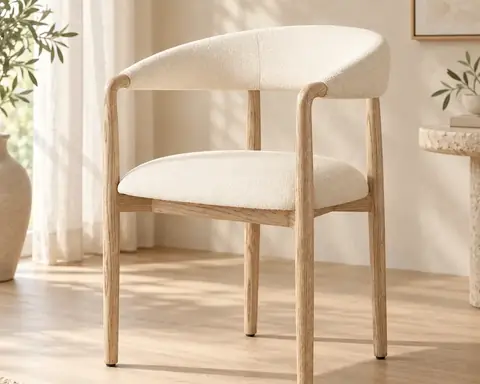
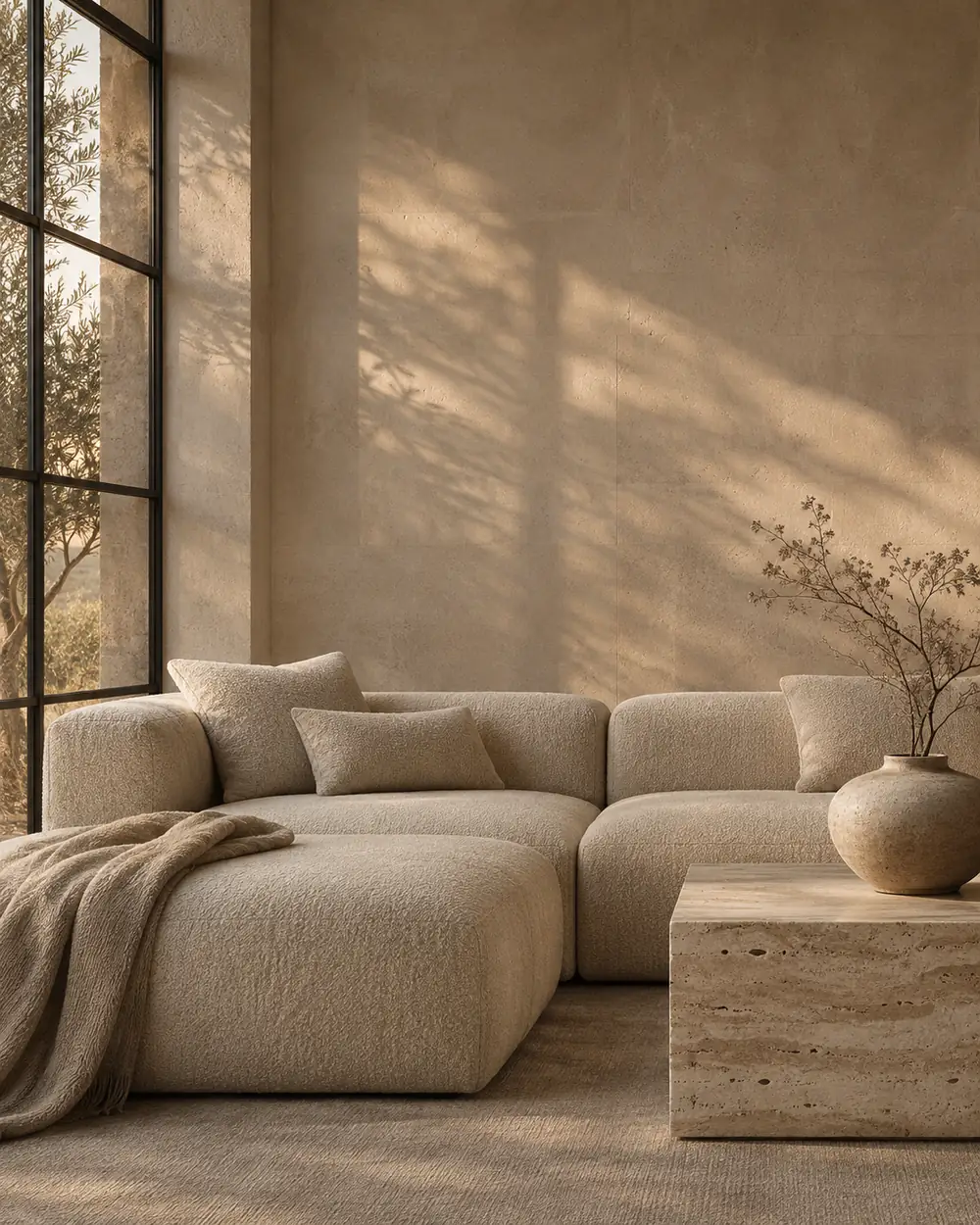
- Bouclé – highly fashionable texture; choose tightly constructed qualities to reduce snagging.
- Leather and vegan leather – durable and easy to wipe; check thickness, finish and abrasion data.
A practical specification checklist
- Abrasion result and test method.
- Pilling grade.
- Light and rubbing colourfastness.
- Fire standard and test report.
- Cleaning code and recommended products.
- Repeat and railroading direction for pattern matching.
Sharing this checklist with your manufacturer at the start of a project avoids late substitutions and keeps the installation on schedule.
Frequently asked questions
What Martindale rating do I need for a hotel?
For public areas and restaurant seating, specify 30,000 Martindale rubs or more. Many specifiers choose 50,000+ for heavy-traffic lobby and dining furniture.
Is bouclé suitable for hospitality use?
Bouclé can be used in hospitality if the specific quality has a high rub count, good pilling resistance and meets the required fire standard. Loop-pile bouclé can snag, so tightly constructed qualities are preferred for public areas.
Can I supply my own fabric (COM)?
Yes. Customer's own material (COM) is common in contract projects. The factory will confirm the yardage required for each model and check that the fabric is suitable for the design.