How to Source Upholstered Sofas from China: A Buyer's Guide
A step-by-step guide to sourcing upholstered sofas and chairs from a Chinese factory: specs, sampling, MOQ, quality control, packaging and shipping.
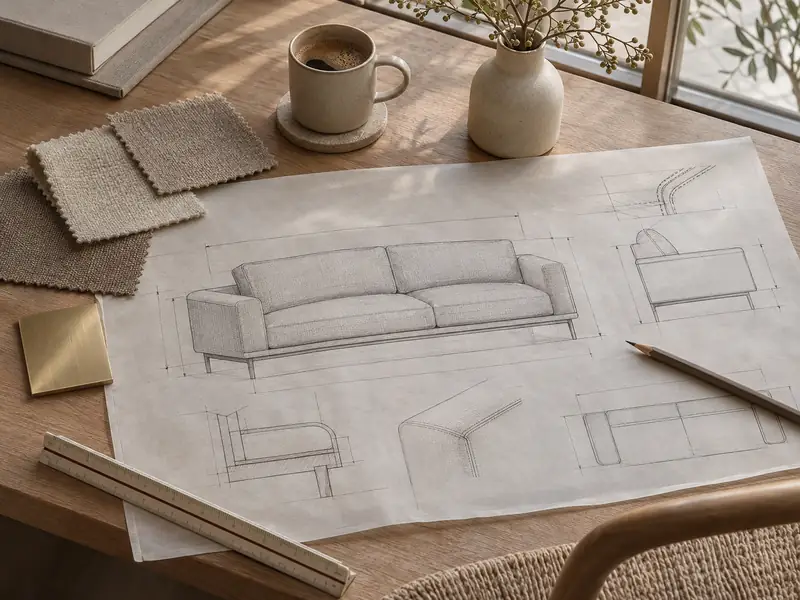
Buying upholstered furniture directly from a factory can cut landed cost substantially compared with buying through a trading company or wholesaler. It also gives you control over materials, comfort and branding. The trade-off is that you take on responsibility for specification, approval and quality control. This guide explains how professional buyers structure the process.
1. Start with a written specification
The most common cause of disappointing orders is a vague brief. "A sofa like this picture" leaves hundreds of decisions to the factory. Before you request quotations, prepare a one-page specification for each model that covers:
- Overall dimensions – width, depth, height, seat height and seat depth, with tolerances (±2 cm is standard).
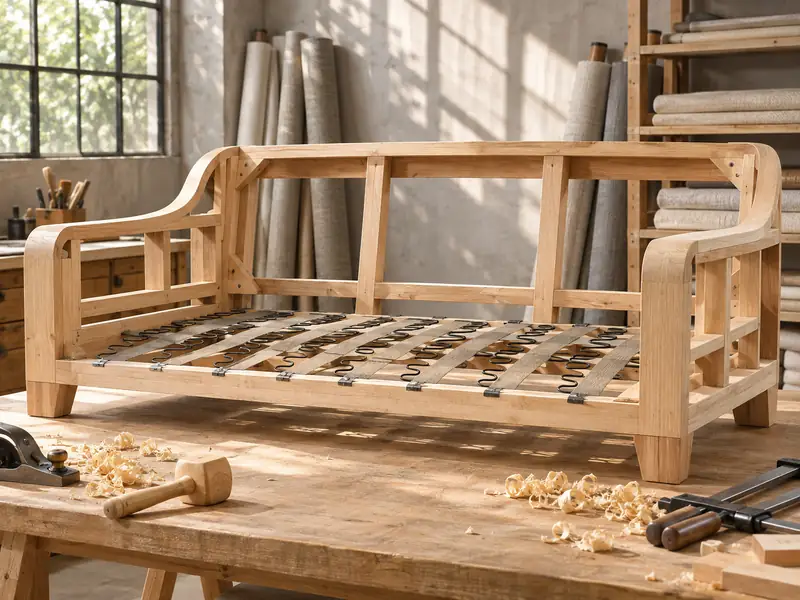
- Frame – kiln-dried hardwood, engineered plywood or a combination, and whether the frame must be knock-down (KD) for shipping.
- Suspension – pocket springs, sinuous (S-) springs or elastic webbing.
- Cushion fill – foam density in kg/m³, whether foam is wrapped in fibre or a feather blend, and whether back cushions are loose or fixed.
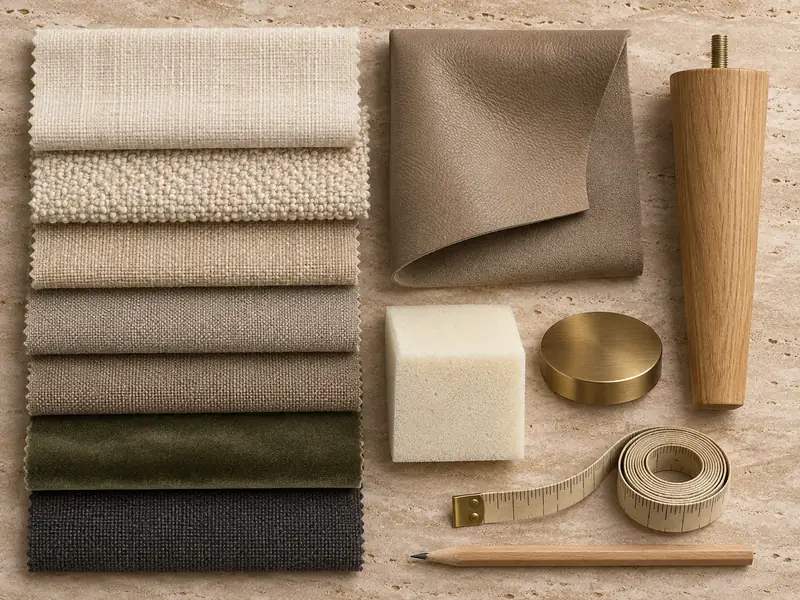
- Upholstery – fabric type, composition, rub count (Martindale or Wyzenbeek) and any fire-safety standard required in your market.
- Legs and finishes – timber species, stain colour, metal finish and glides.
- Labelling and packaging – law labels, care labels, your branding and carton markings.
A clear spec lets you compare quotations fairly. It also becomes the checklist for inspection later.
2. Shortlist factories, not trading companies
Ask each supplier for photos and video of their production floor, the frame workshop and the cutting room. A genuine upholstery factory will show sewing lines, frame assembly and foam cutting in one facility. Request a list of the markets they already ship to and the fire-safety standards they routinely meet. Video calls with a live walk-through of the factory are now normal and take less than thirty minutes.
3. Request quotations on the same basis
Ask every factory to quote FOB (free on board) at a named port, with the same fabric grade and the same quantity breaks, such as 20, 50 and 100 pieces per model. Ask them to state the packed carton volume (CBM) for each item. Volume is critical: freight is charged per container, so a sofa that packs into 1.2 m³ instead of 1.8 m³ can reduce your landed cost more than a small difference in unit price.
4. Approve a pre-production sample
Never skip sampling on a new model. A sample confirms comfort, proportions, stitching quality and fabric behaviour. When you receive the sample:
- Sit on it for at least ten minutes and check that the seat does not bottom out.
- Measure every dimension against the spec.
- Check seams, pattern matching, cushion fit and leg alignment.
- Photograph it from fixed angles; these photos become the golden sample reference.
If changes are needed, request a revised sample rather than approving with verbal comments.
5. Agree terms in writing
A purchase order or proforma invoice should state the approved sample reference, material specification, quantity, unit price, Incoterm, delivery date, packaging, and payment terms. The common structure in our industry is a 30% deposit with the balance paid before shipment, after inspection.
6. Inspect before shipment
Book an independent pre-shipment inspection when production is at least 80% packed. Inspectors usually sample pieces under AQL 2.5 (general inspection level II) and check dimensions, workmanship, function (such as swivel or recline mechanisms), packaging and carton markings against your spec and the golden sample. Many buyers also add a during-production inspection for first orders.
7. Plan packaging and logistics
Upholstered furniture must be protected against moisture, abrasion and compression. Standard export packing is a poly bag, foam or paper corner protection, and a five-ply export carton. Fragile or high-value items can be crated. Ask the factory for a loading plan showing how many pieces fit in a 20GP, 40GP or 40HQ container.
Typical timeline
| Stage | Typical duration |
|---|---|
| Quotation and specification | 3–7 days |
| Sampling | 15–20 days |
| Mass production | 30–45 days |
| Inspection and loading | 3–5 days |
| Sea freight (port to port) | 20–40 days |
Key takeaways
Sourcing sofas from China works best when you treat it as a managed project: a clear specification, an approved sample, written terms, independent inspection and careful packaging. Factories that are comfortable with this level of detail are usually the ones that deliver consistent quality order after order.
Frequently asked questions
What is a typical MOQ for upholstered sofas from China?
Most upholstery factories accept 20–50 pieces per model, and many allow mixing colours within that quantity. Our MOQ is 20 pieces per model, with mixed fabrics allowed.
How long does it take to produce a container of sofas?
After the sample is approved and the deposit is received, mass production usually takes 30–45 days. Sea freight then adds roughly 20–40 days depending on the destination port.
Should I pay for samples?
Yes. Paid samples are normal for custom upholstery because each one is hand-built. Sample fees are usually credited back against the first bulk order.