Sofa Foam Density Guide: What 30, 35 and 40 kg/m³ Mean
Understand foam density and firmness for sofa seats and backs: kg/m³, ILD, HR foam, feather wraps and how to specify comfort for homes and hotels.

Two sofas can look identical in a photograph and feel completely different after a year of use. The difference is almost always the foam. This guide explains the two numbers that matter, density and firmness, and how to specify them.
Density vs firmness
Density is the weight of a cubic metre of foam, expressed in kg/m³. More material means better resistance to softening and sagging over time, so density is the best predictor of durability.
Firmness is measured as ILD (indentation load deflection) or IFD. It describes how much force is needed to compress the foam by a set amount. Firmness is what you feel when you first sit down. The two are independent. A dense foam can be soft and a low-density foam can feel firm at first but break down quickly.
Recommended specifications
| Use | Seat cushion | Back cushion |
|---|---|---|
| Light residential | 30–32 kg/m³ | Fibre or 25 kg/m³ foam |
| Everyday residential | 35 kg/m³ | Feather/fibre blend or 28–30 kg/m³ foam |
| Hospitality and contract | 38–40 kg/m³ or HR foam | 30 kg/m³ foam or fixed upholstered back |
Wraps and toppers
Most premium seat cushions are not plain foam blocks. The foam core is wrapped in polyester fibre or a feather and down blend in a cambric casing. The wrap softens the edges, gives a fuller, relaxed look and adds an initial softness while the core provides support. Feather wraps need occasional plumping; fibre wraps are lower-maintenance and suit rental and hospitality projects.
Common comfort profiles
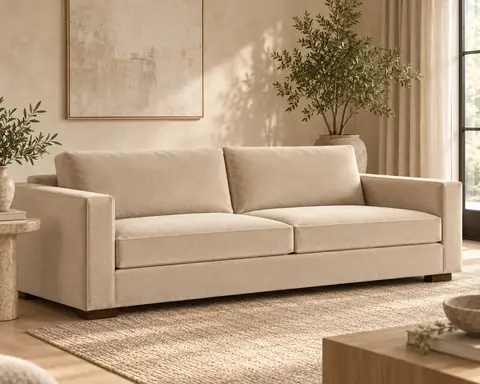
- Tailored and supportive – firm HR foam core, thin fibre wrap. Good for dining, office and hotel lounge seating.
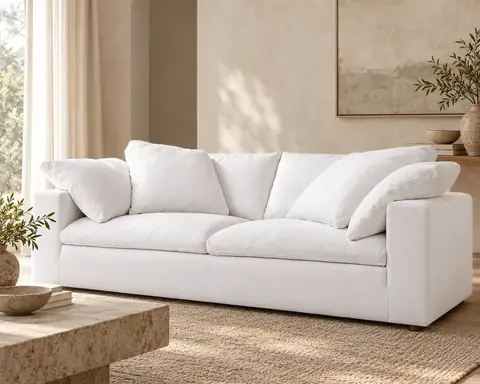
- Relaxed and soft – medium foam core, generous feather-blend wrap, loose back pillows. Typical of oversized living-room sofas.
- Sink-in lounge – softer foam core over pocket springs with a deep feather wrap. Comfortable but requires more maintenance.
Fire safety and foam
Different markets regulate upholstery fillings differently. The UK requires combustion-modified foam under its furniture fire-safety regulations, and California uses the TB 117-2013 smoulder standard for residential upholstery. Always state the destination market so that the factory can source compliant foam and provide test documentation.
How to specify foam on a purchase order
- State the core foam density for seat and back separately.
- State the firmness or provide a reference sample.
- Specify the wrap material and weight.
- State the required fire-safety standard for your market.
With these four lines on your PO, you can be confident that every production run will feel like the sample you approved.
Frequently asked questions
What foam density is best for a sofa seat?
For everyday residential use, a seat foam of around 35 kg/m³ is a reliable choice. For hotels, restaurants and other contract settings, specify 38–40 kg/m³ or high-resilience (HR) foam for better shape retention.
Is higher density foam firmer?
Not necessarily. Density measures how much material is in the foam and relates to durability. Firmness is measured separately as ILD or IFD. You can have dense foam that feels soft and lighter foam that feels firm.
What is HR foam?
High-resilience (HR) foam has a more irregular cell structure that springs back quickly and resists fatigue. It is the preferred choice for premium seat cushions and heavy-use hospitality furniture.