Sofa Frame Construction: Hardwood vs Plywood vs Metal
How sofa frames are built and what to specify: kiln-dried hardwood, engineered plywood, metal frames, joinery, suspension and expected lifespan.
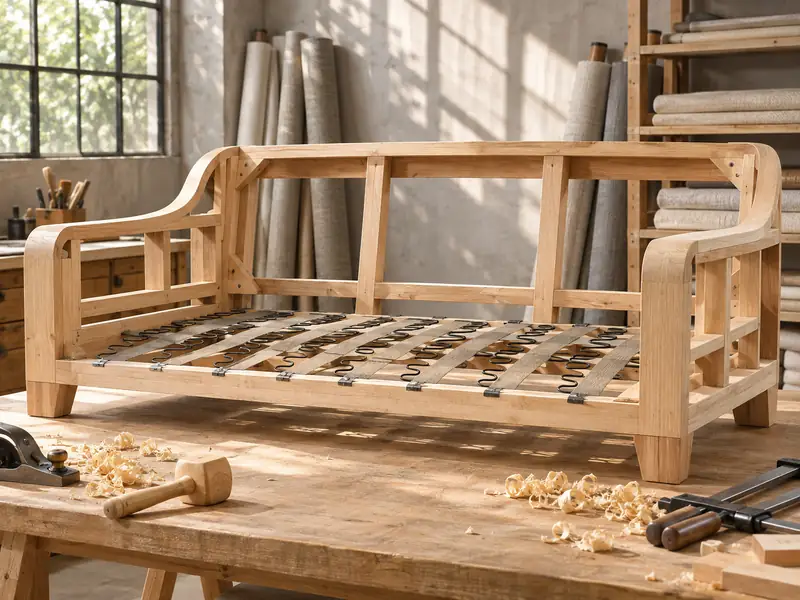
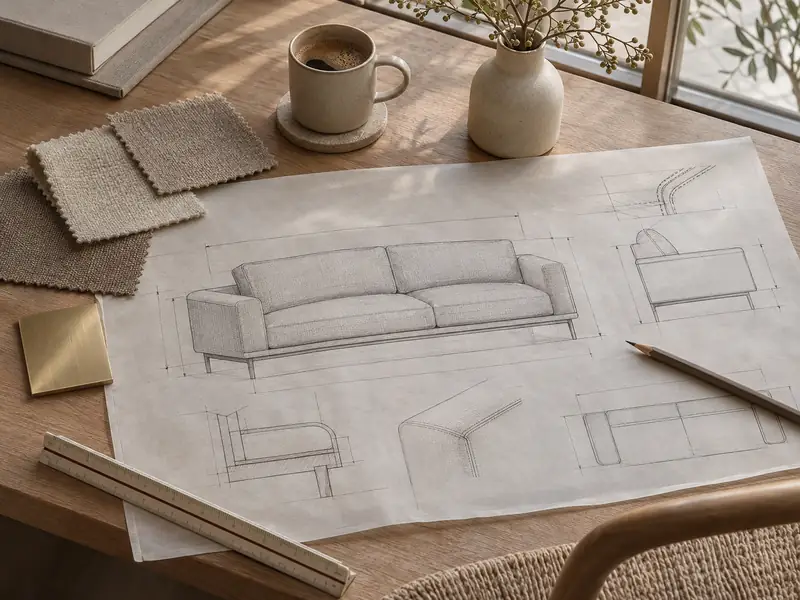
The frame is the part of a sofa you never see and the part that decides how long it lasts. Fabric can be replaced and cushions can be refilled, but a failing frame ends a sofa's life. Here is how professional manufacturers approach frame construction and what buyers should specify.
What does a sofa frame do?
A sofa frame carries the weight of the sitters, transfers it to the legs and holds the suspension system under tension. It also defines the shape: arm profile, back pitch and seat depth are all built into the frame before any foam is added. A good frame stays square and silent for many years of daily use.
Kiln-dried hardwood frames
Solid hardwood remains the benchmark. Species such as beech, birch, ash and oak combine strength with good screw-holding ability. The critical word is kiln-dried. Timber is dried in a controlled kiln to a moisture content of roughly 8–12%, matched to the climate where the sofa will be used. Undried timber continues to shrink after assembly, which loosens joints and leads to the familiar creak of a cheap sofa.
Engineered plywood frames
Multi-ply plywood (typically 15–18 mm) is cross-laminated, so it resists warping and splitting. It is ideal for shaped components such as curved arms and back profiles, which would waste a great deal of solid timber. Most high-quality factories use a hybrid frame: hardwood for the front rail, back rail and seat rails that carry the load, and plywood for arms, panels and shaped parts.
Metal frames
Welded steel or aluminium frames are used for slim modern sofas, chairs with exposed metal bases and many contract seating products. They are very strong and allow thin profiles. Specify powder coating or plating suitable for the environment, and make sure the frame is fully padded wherever it meets the upholstery.
Joinery: how the frame is held together
| Method | Where it is used | Comments |
|---|---|---|
| Glued and dowelled joints | Main rails | Strong and stable when glue is correctly applied |
| Glue plus screws | Rails and stretchers | Common in quality upholstery production |
| Corner blocks | Inside corners of seat frame | Reinforce the joints that carry the most stress |
| Staples only | Non-structural panels | Acceptable for panels; not for load-bearing joints |
Suspension systems
- Pocket springs – individually wrapped coil springs that respond independently. They give supportive, even comfort and are common in premium seats.
- Sinuous (S-) springs – zig-zag steel springs running front to back, clipped to the rails. Durable, cost-effective and widely used.
- Elastic webbing – woven elastic straps used in slim modern designs and backs. Quality and tension matter; low-grade webbing sags.
How to specify a frame on your purchase order
- State the timber species and that it must be kiln-dried.
- Specify plywood thickness and grade where plywood is used.
- Require glued-and-screwed joints with corner blocks on the seat frame.
- Specify the suspension type and the spring gauge or webbing grade.
- Ask for photos of the bare frame of your production run before upholstery.
Requesting bare-frame photos during production is one of the simplest ways to confirm that what you approved in the sample is what you receive in the container.
Frequently asked questions
What is the best wood for a sofa frame?
Kiln-dried hardwoods such as beech, birch, ash or oak are the best choice for load-bearing rails because they are strong and dimensionally stable. Engineered plywood is a good partner material for panels and arms.
Why does kiln drying matter?
Wood that is not dried to around 8–12% moisture content shrinks after the sofa is built, which loosens joints and causes creaking. Kiln drying stabilises the timber before it is cut.
Are metal sofa frames durable?
Welded steel frames are very strong and are often used for slim, contemporary sofas, outdoor-style pieces and contract seating. They must be properly treated against corrosion and padded so the frame is not felt through the upholstery.